Here's a post for all you Chaucer fans, who are not afraid to take your love of Chaucer beyond the classroom. Bill Baily performs a skit in the spirit of Chaucer.
Sunday, December 10, 2006


Tecmo
Tecmo Bowl (1988) and Tecmo Super Bowl (1991) reinvented football video games. The controls are simple but intuitive, while the side scrolling camera angle allows the player better focus on most of the action. Recently a few friends of mine told me about an open source version of Tecmo Super Bowl complete with updated rosters. Our plan is to create a tournament through this program and create a website to keep track of game statistics. This is very interesting to me because it merges my generation of gaming (Nintendo and Super Nintendo) with the current generation of online gaming.
Here's some classic Bo Jackson Tecmo Super Bowl Action
Here's some classic Bo Jackson Tecmo Super Bowl Action
Thursday, December 07, 2006
Time

In response to Professor Stearns' interest in my previous post about a topic in 671, I have another, which probably covers the most popular topic of the class: time. Just look at the photo: James seems to be on the brink of a mental overload; he's obviously overwhelmed by the apparent rupture in the space-time continuem that occurs weekly during our class. Jack seems paralyzed; maybe he is. How else do we explain why two hours and thirty minutes becomes a marathon of cosmic proportions. How many years of life have we lost while attending the 671 time-warp? The damage is done, and I don't want to think about it anymore.
America is not the Coolest

A few days ago NPR did a show on how Japan is replacing the U.S. as the hub of popular culture. I had not really thought about it like that before, but I agree. In terms of video games, most of the good game developers come from Japan. And many games are released in Japan six months before they get to the U.S. (there are many good games that never reach the U.S. market). Some games I own are based on Japanese anima or manga. My current favorite video game, Okami, is based on Japanese mythology. I have been trying to purchase an illustration book based on Okami's Hokusai-like art work (I have a gigantic poster of Hokusai's "In the Well of the Great Wave of Kanagawa."), but there is not English translation. Last year I found the most detailed model of the X-Wing (from Star Wars) to be made by a Japanese company called Finemolds (they make the most detailed Star Wars models without question). The only problem was that the directions were in Japanese. At one point, I was looking to pay a translater to decipher the directions. Luckily, I found an English translation of most, not all, of the directions (Yes, that is the model I made in the photo). Maybe my next hobby will be to learn Japanese.
Wednesday, November 29, 2006
50 Ways To Leave Your Lover
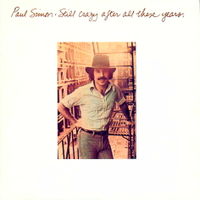
Tuesday night in 671 James, Jack, and I were talking about Paul Simon's Song. Simon writes "there must be 50 ways to leave your lover," but he only lists five! I think it is a great song, but what about the other forty-five? Well, maybe if Paul Simon wrote that song now he might have been able to find all fifty ways on the internet. Apparently, we are not the only people to have discussed this topic. Thanks to technology, here is a list of 45 additional ways to leave your lover. I found 76 ways that rhymed on the internet with no intention of using any.
Tuesday, November 21, 2006
Project Abstract and Professional Website
The Future of Literacy is Video Games?
My project is a website that addresses topics in bringing commercial video game into the classroom. Specifically, the website is comprised of links to articles on video games in education, essays on specific video games, a brief explanation of various forms of role-playing games, video game music, and projects with video games. Visitors to the website will also be able to comment on all these topics. I can present my work on a PC or a MAC.
My professional website is comprised of work and activities that a future employer can view if he or she is interested. If any of you would like to look at my website, click here.
Sunday, November 12, 2006
Will's Visit
Will’s visit was great. I’m glad I had the opportunity to talk with him over lunch and dinner. Dave and I were lucky enough to listen to Will sing a little Supertramp during the drive back to his room. On Will’s suggestion, I checked out the open-source role-playing game Second Life. He described it as more of an experience than a game. Second Life is like The Sims, a reality simulator. Second Life even lets a player purchase property. Some people are able to make real money by selling virtual items (like hats) for use in the game! Sadly, my computer cannot run the program. So the character that I created, Matt Semyorka, is somewhere in Second Life standing idly.
Professor Reid also referred me to terranova , a scholarly blog about Massive Multiplayer Online Role Playing Games (MMORPG). I read an article by Aaron Delwiche that discusses the unique social community that MMORPGs create and his reflections on having taught undergraduate classes; one using Everquest and another with Second Life. One of the requirements of Delwiche’s courses is to play the game for five hours a week. While students are in the game, they are to interview other players about their gaming experience and report on their findings. Interesting idea.
Professor Reid also referred me to terranova , a scholarly blog about Massive Multiplayer Online Role Playing Games (MMORPG). I read an article by Aaron Delwiche that discusses the unique social community that MMORPGs create and his reflections on having taught undergraduate classes; one using Everquest and another with Second Life. One of the requirements of Delwiche’s courses is to play the game for five hours a week. While students are in the game, they are to interview other players about their gaming experience and report on their findings. Interesting idea.
Subscribe to:
Posts (Atom)

The Giants will go as far as Eli takes them.